Almonds
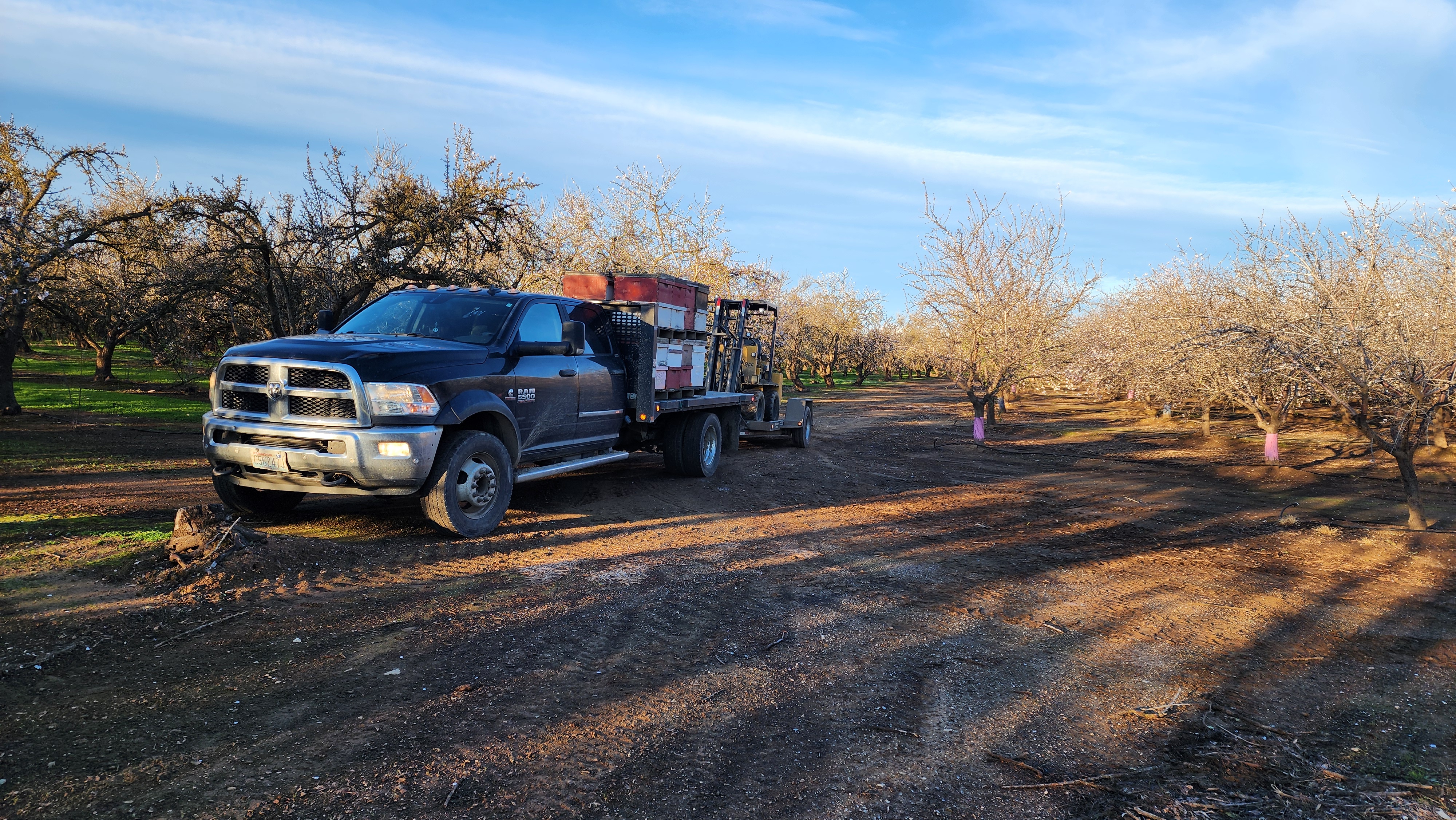
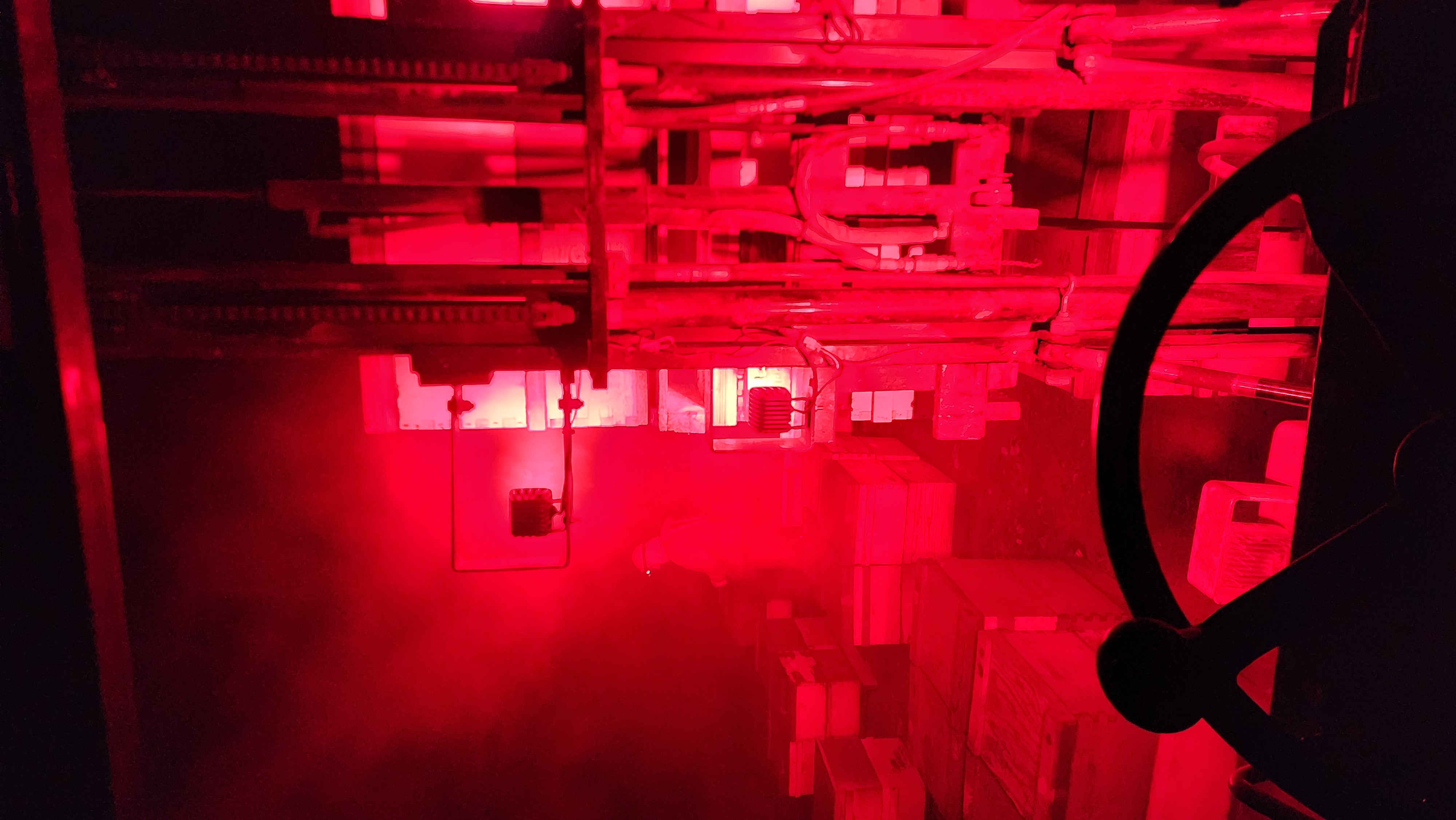
The season opens far from home. When California's almond orchards break into bloom in late winter, they call for more bees — and stronger ones — than any other crop on the continent. We run full-strength colonies south for the bloom, then bring them back to build on the basin's spring.
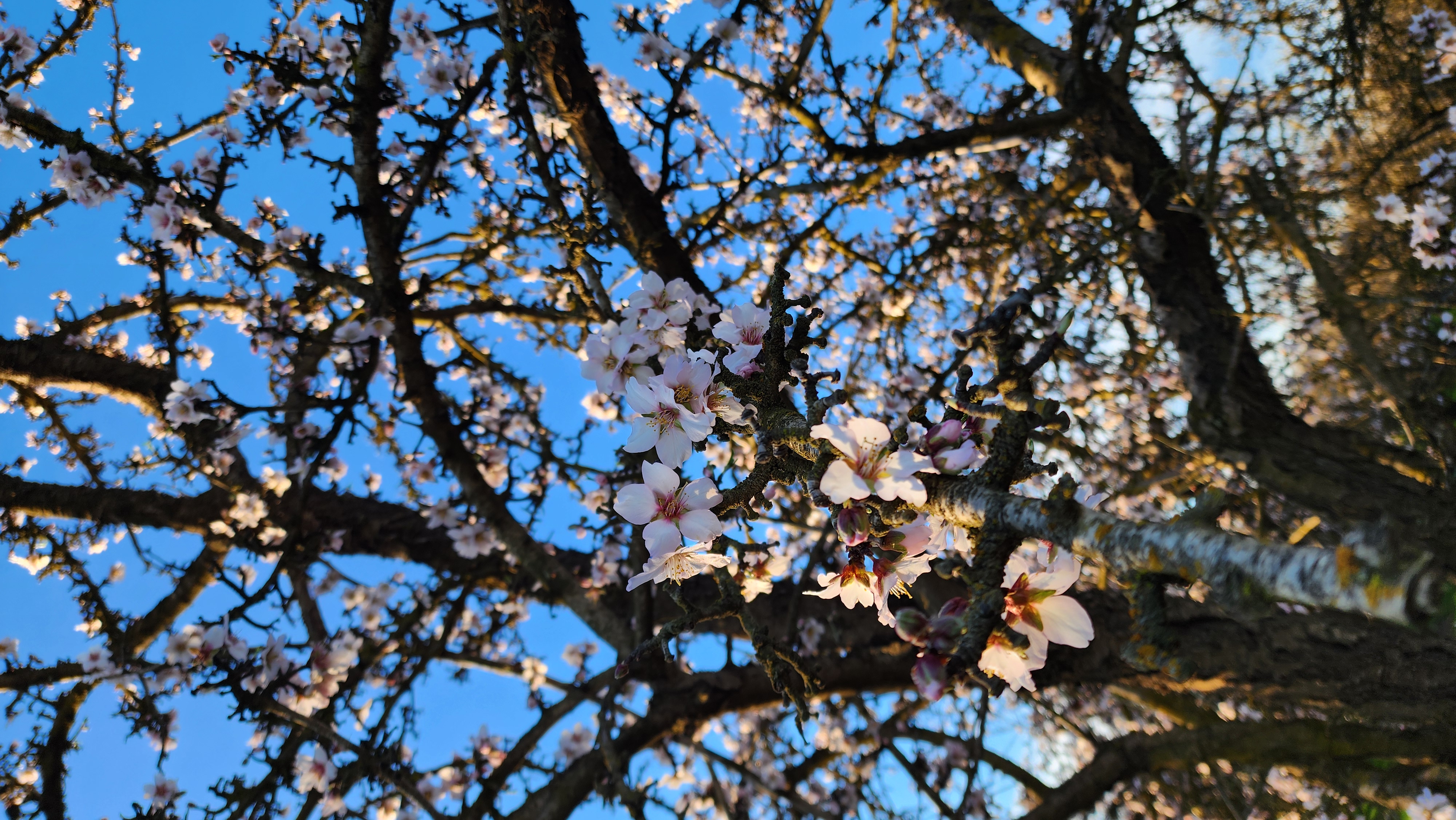

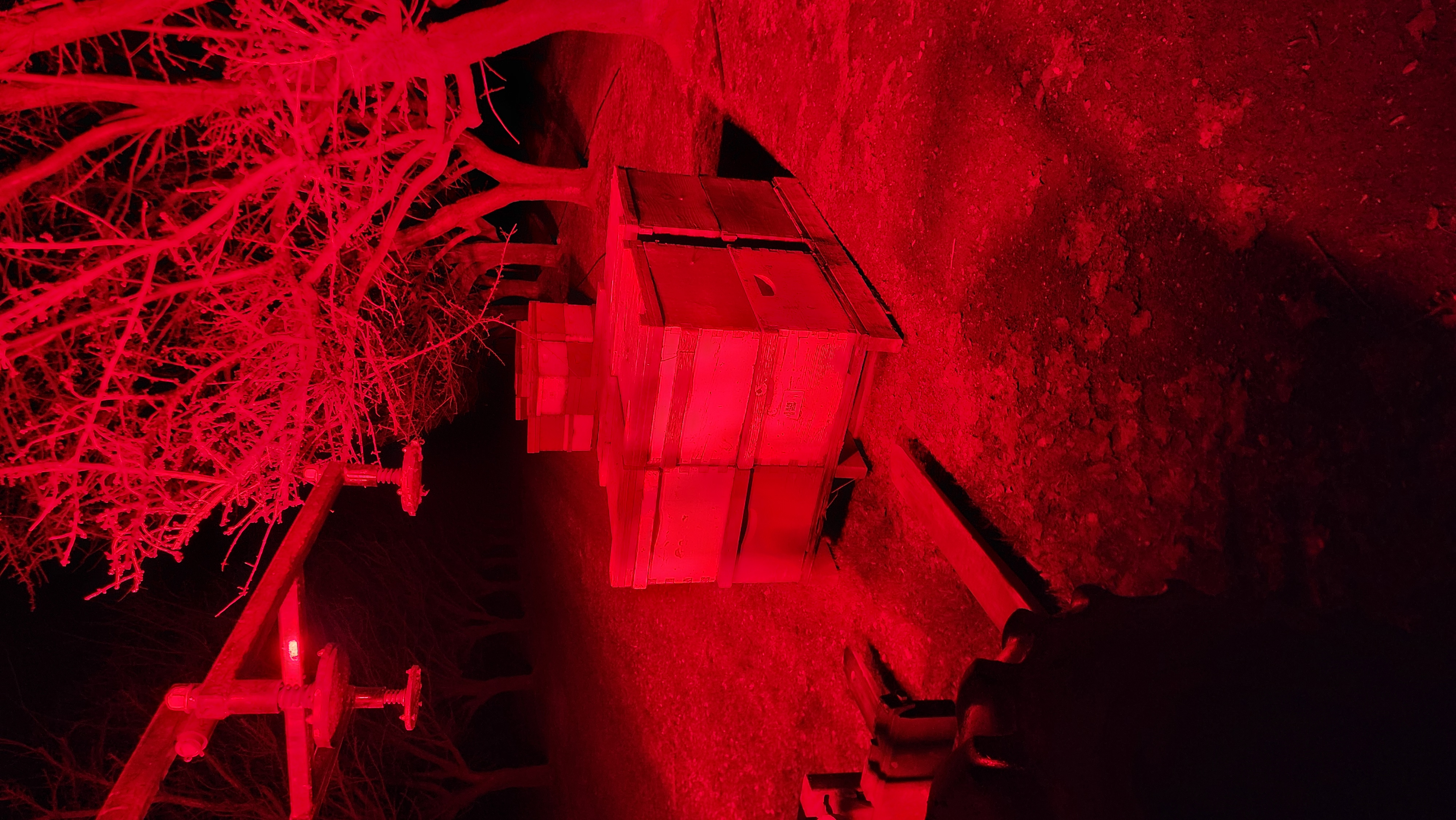
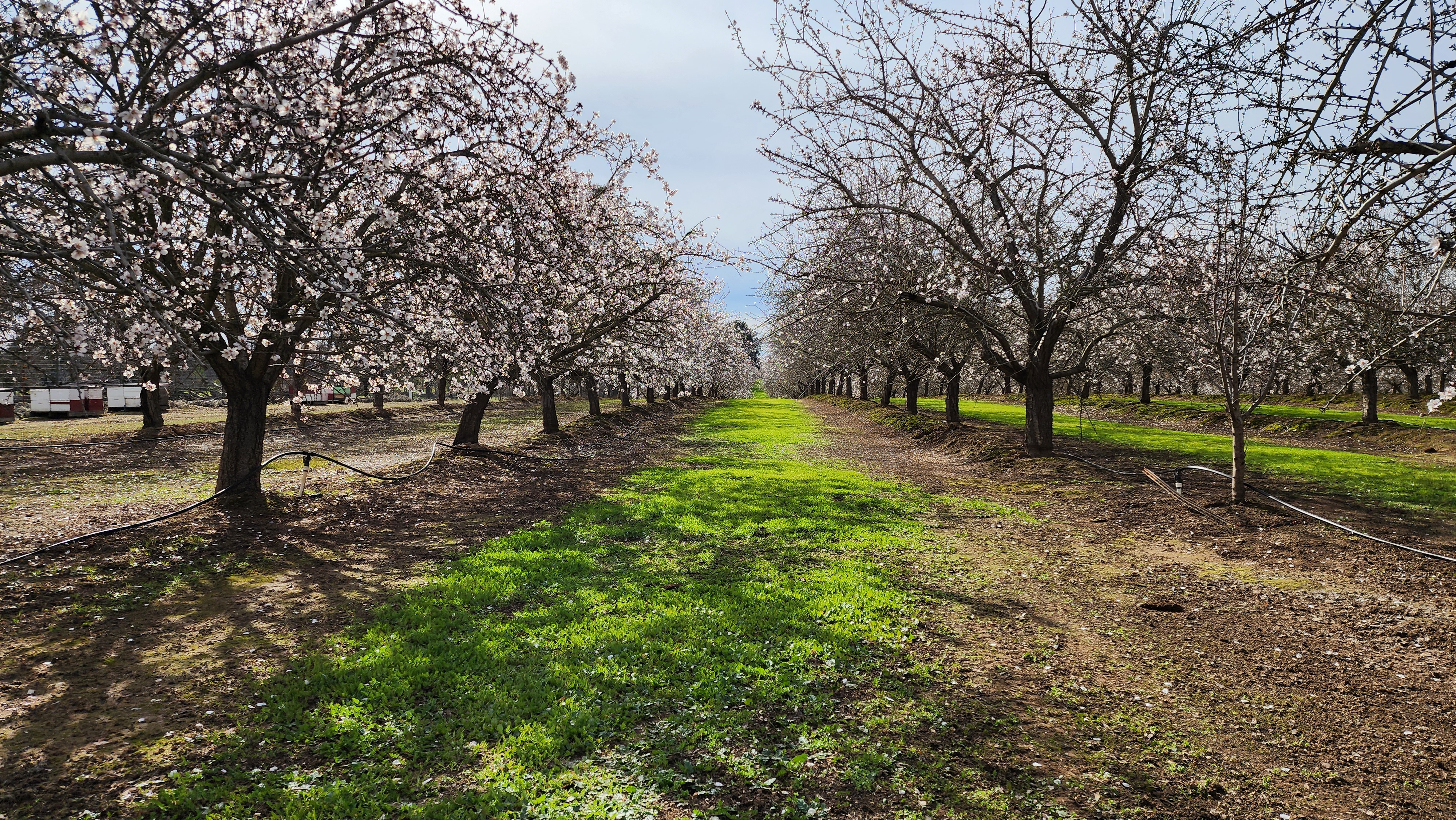
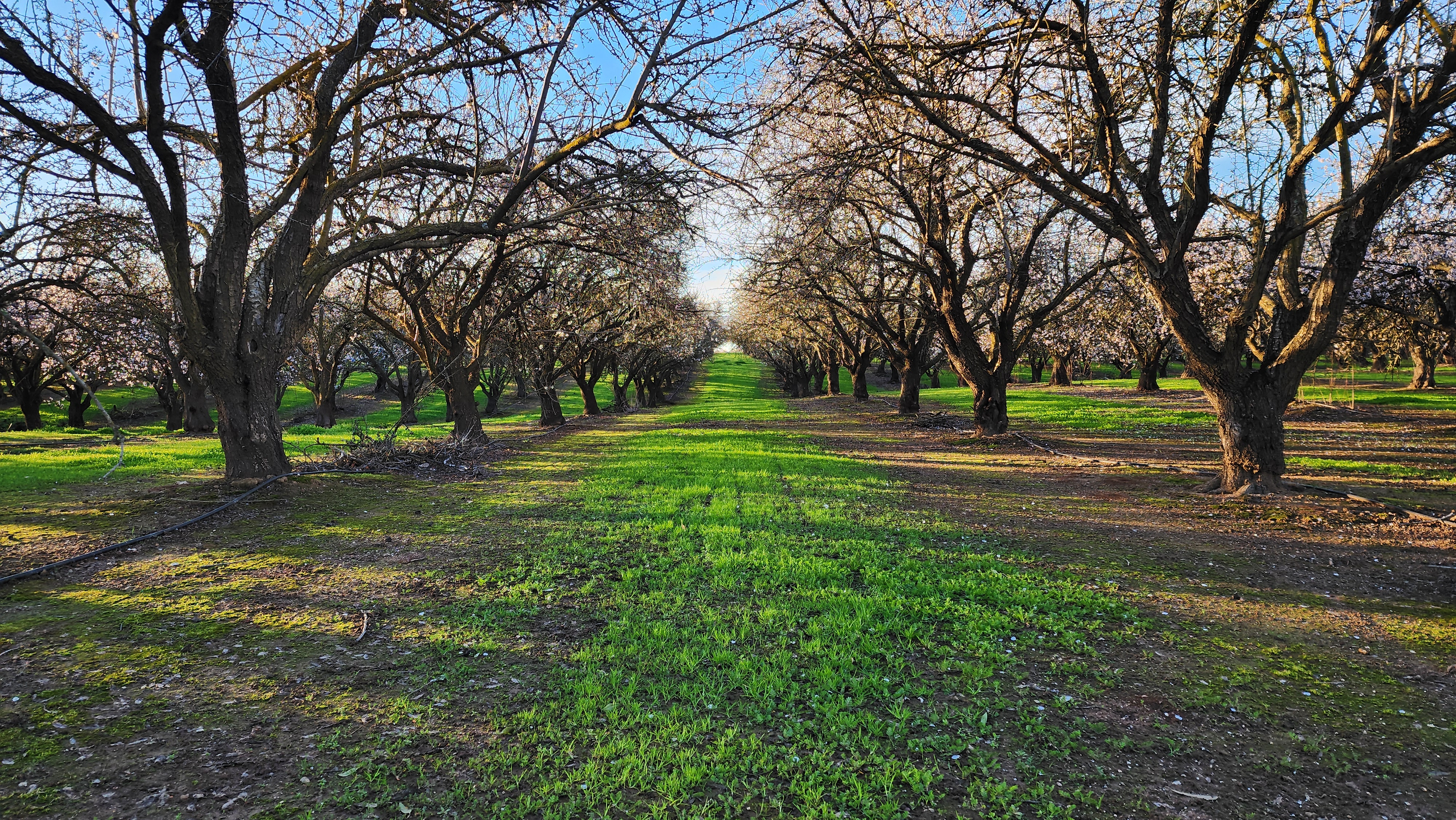
Set to the field, not a chart.
| Planting & row spacing | Recommended |
|---|---|
| Standard plantingsconventional row spacing | 2colonies / acre |
| High-density & cool bloomtight rows, short fly-weather | 2.5–3colonies / acre |
Almond is the heaviest pollination call of the year. The long-standing industry baseline is about two strong colonies per acre; growers step toward three in dense plantings or when cool, wet bloom weather shortens the hours bees can fly. What matters as much as the count is colony strength — research going back to UC Davis points to an average of eight frames of bees per colony for a good set.
Strong colonies, in the right place, on time.
- Strong colonies, not just boxesWe bring inspected, full-strength colonies — the difference between a box and a working colony is the whole job.
- In before 5% bloomColonies are set before the earliest variety opens and pulled at petal fall, so bees are working the whole bloom.
- Built for cross-pollinationAlmonds need pollen moved between varieties; we place and distribute colonies to keep bees crossing the rows.
- Health tracked through the jobStrength and mite pressure are monitored before and during — the bees should come home better than they left.
If you want to go deeper.
Independent university-extension and research sources on almonds pollination — useful background as we plan your season together.
These figures are general industry recommendations, not a fixed price or a promise of a specific colony count. Final stocking is set per field with you, based on acreage, planting density, variety and bloom conditions. External links open third-party sites we don't control.
Planning almonds for the coming season?
Tell us your acreage and bloom window and we'll talk through colony numbers, timing and placement.