Blueberries
Blueberries ask more of a colony than they look like they should. The flowers are little bell-shaped urns that honey bees can't buzz open the way a bumblebee does — so growers stock heavily and lean on strong, early-building colonies for a full, even set.
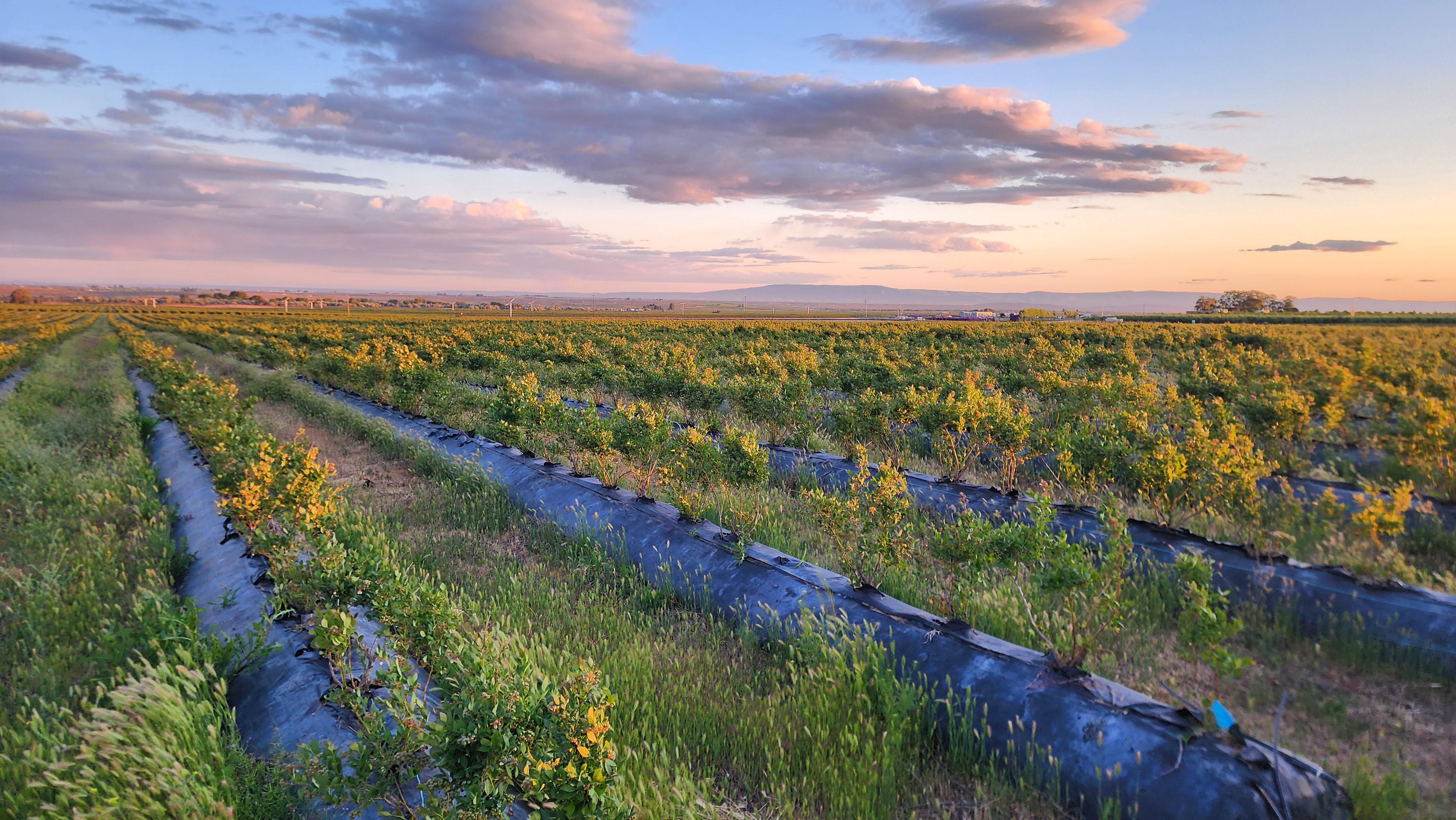
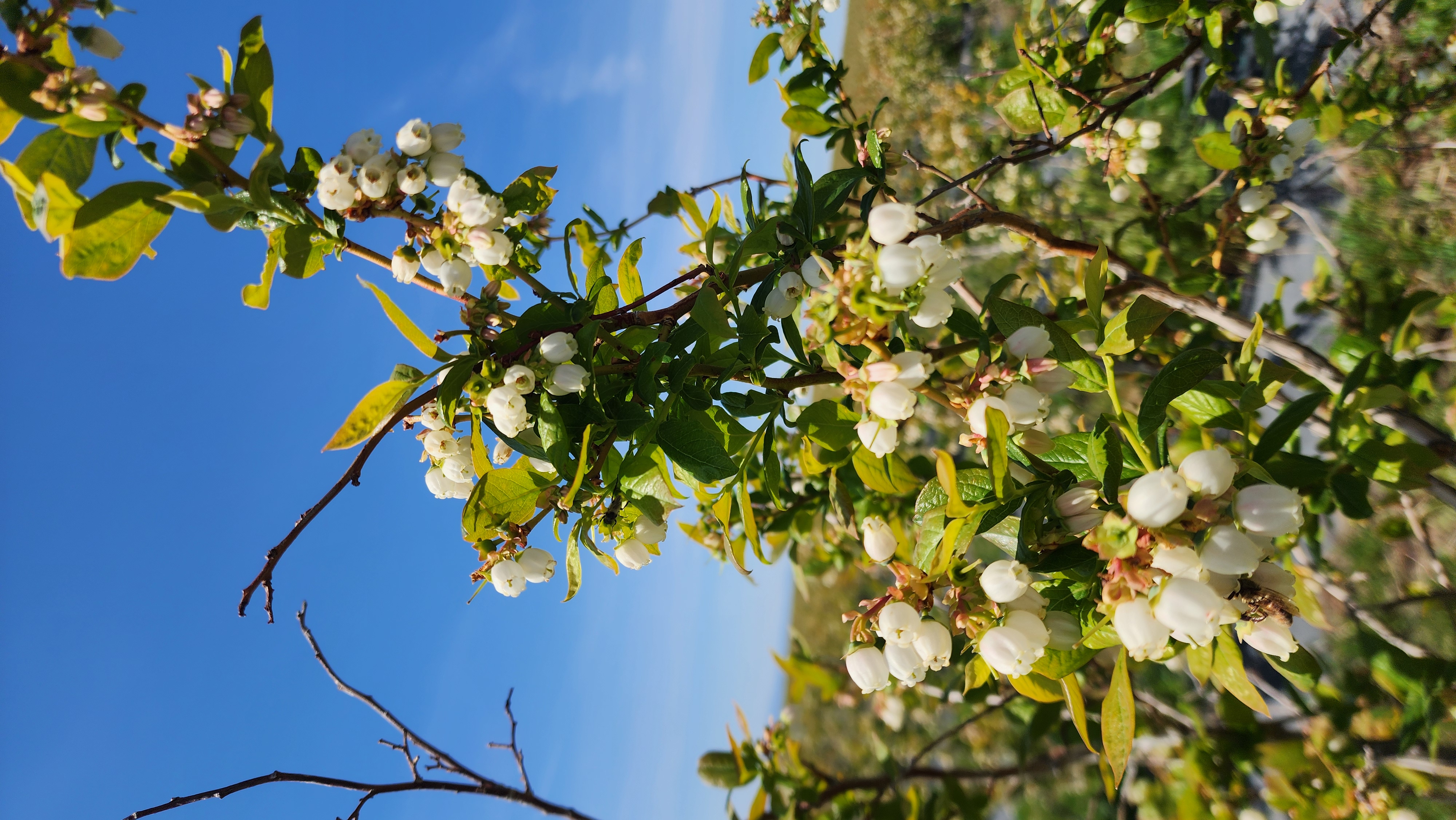
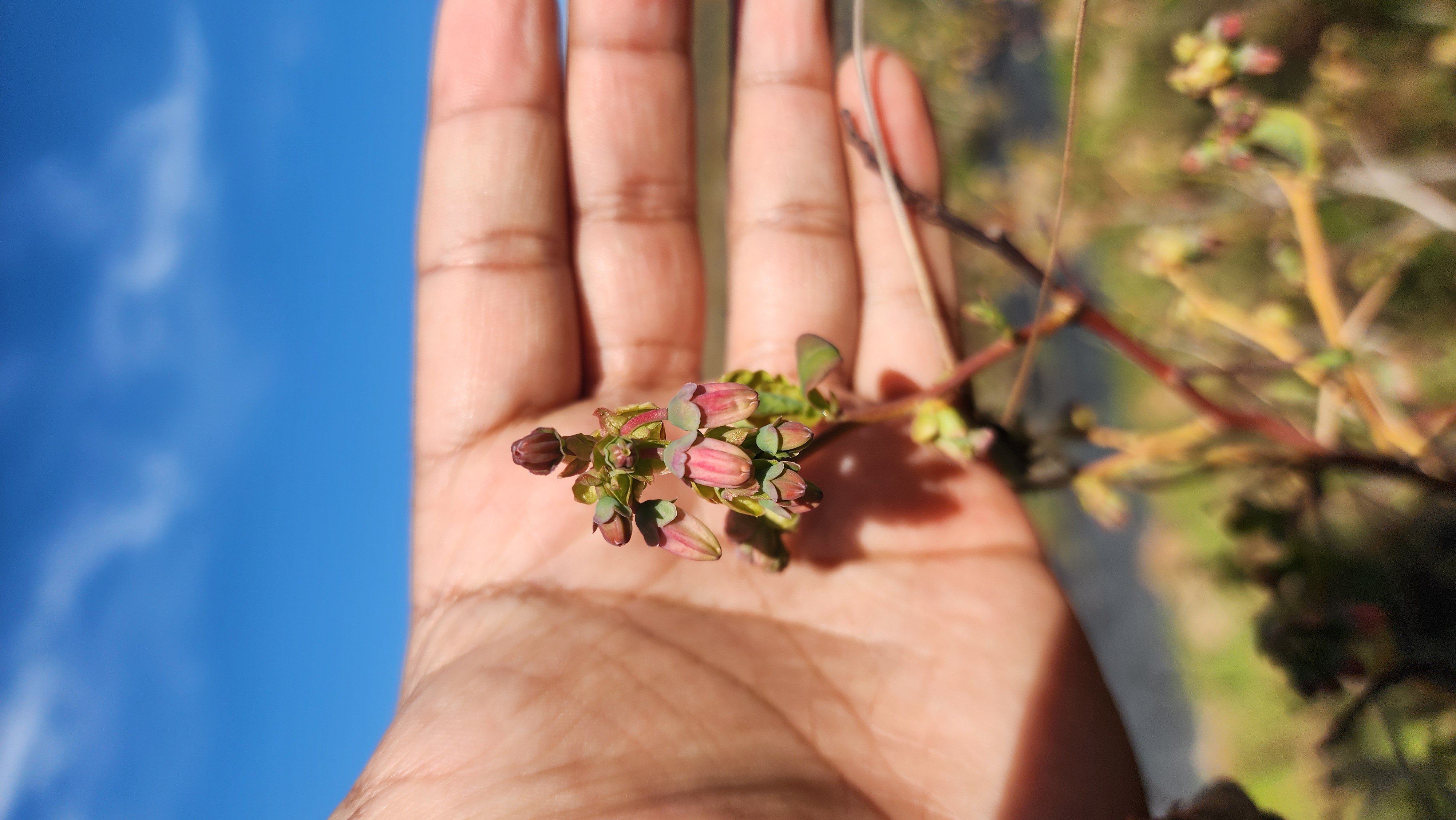
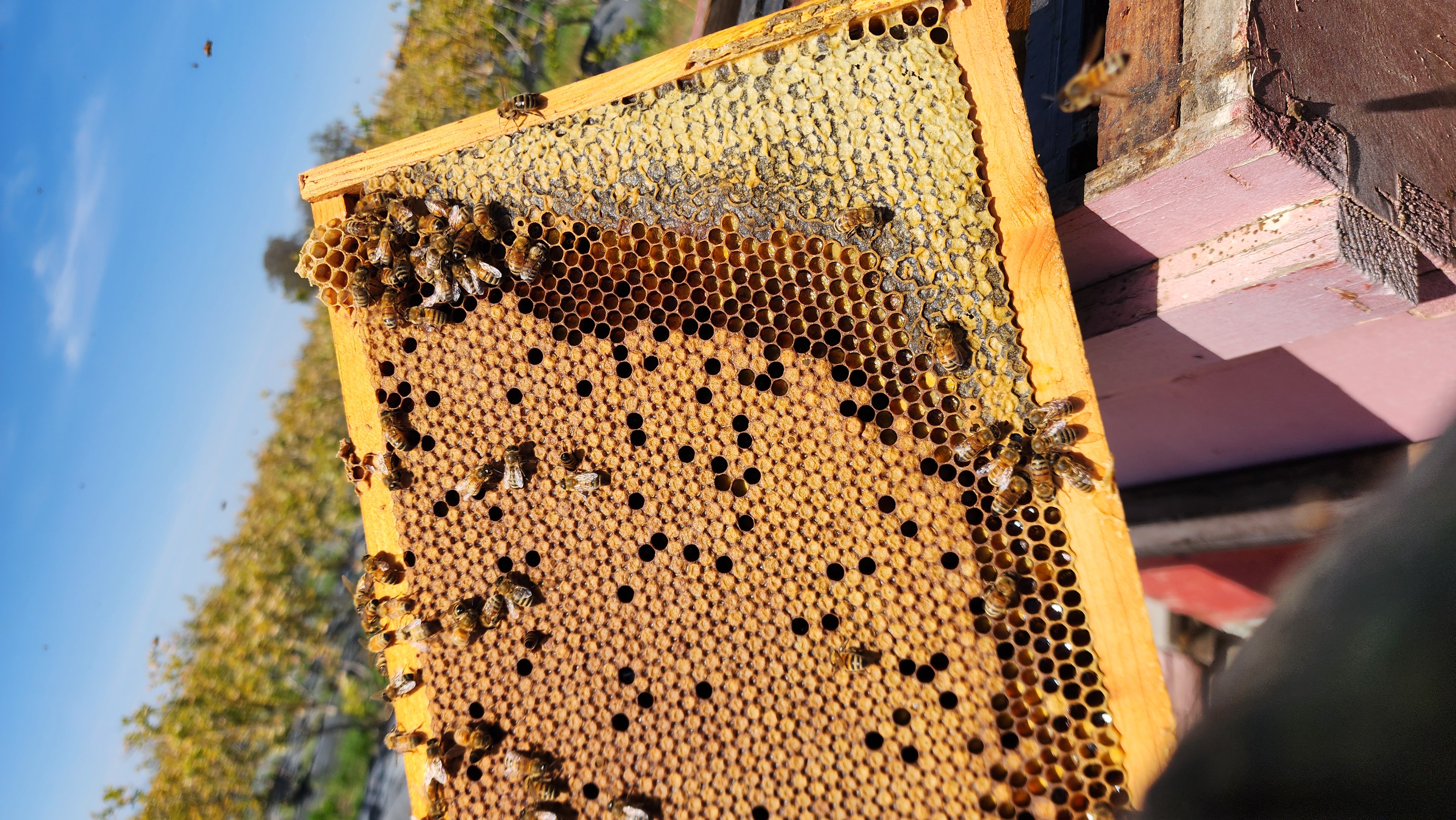

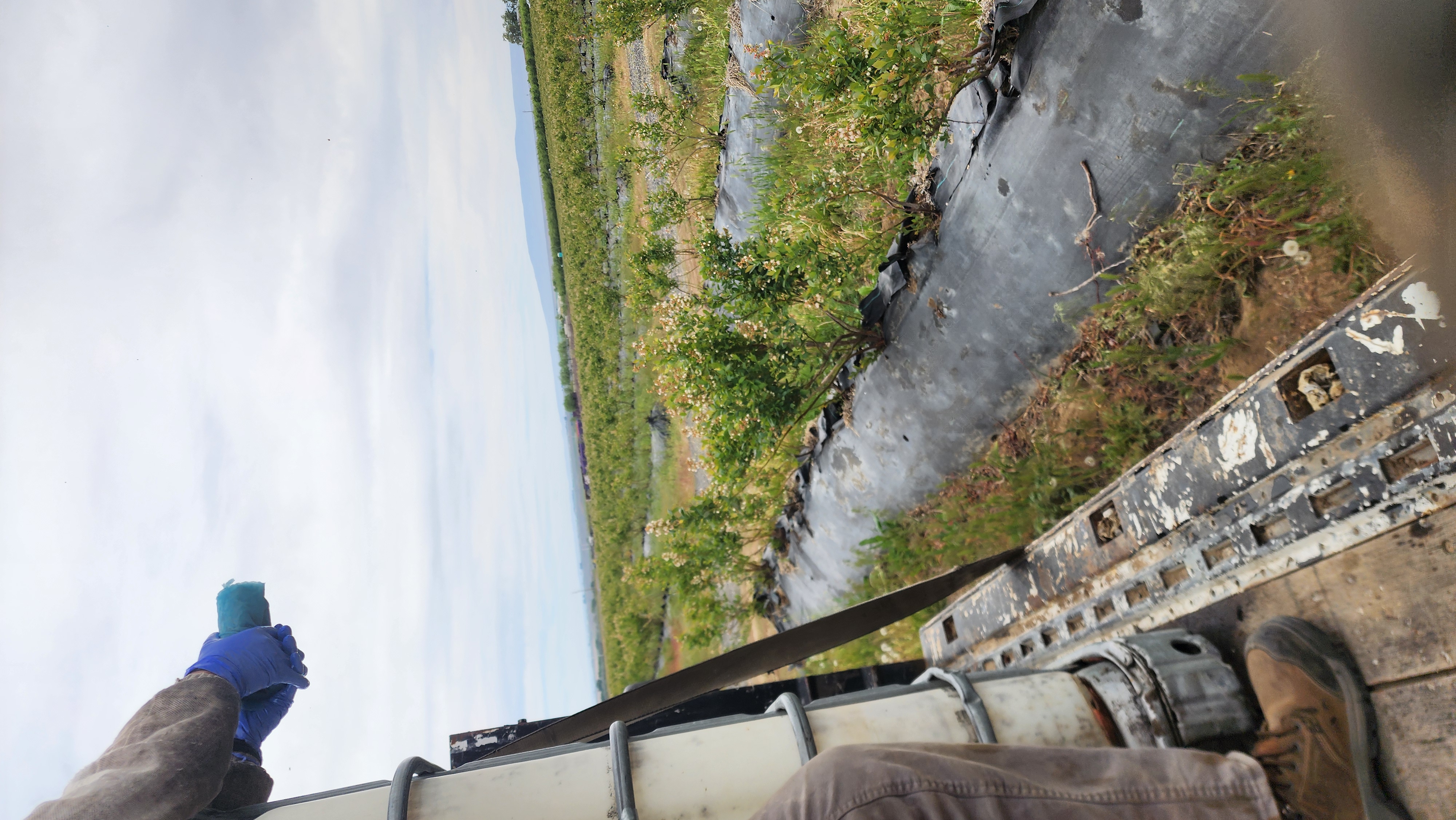


Set to the field, not a chart.
| Planting & row spacing | Recommended |
|---|---|
| Standard plantingsmature, attractive varieties | 3–4colonies / acre |
| Cool bloom & tough varietiesless-attractive cultivars, cold springs | 5–8colonies / acre |
Because the flower shape works against honey bees, blueberry pollination runs on numbers and distribution. A baseline of three to four colonies per acre is common, and growers — including here in Washington — step up to five, even eight in cooler weather or with less self-fertile varieties. The extra colonies act as pollination insurance against a short, cold bloom.
Strong colonies, in the right place, on time.
- Stocked for an even setBell-shaped flowers need many visits — we bring the colony numbers an even, marketable berry takes.
- Distributed through the fieldColonies are grouped throughout the planting, not just on one edge, for full coverage.
- In at 5–25% bloomTiming the move to early bloom keeps bees focused on blueberry, not competing flowers.
- Health tracked through the jobStrength and mite pressure are monitored before and during the job.
If you want to go deeper.
Independent university-extension and research sources on blueberries pollination — useful background as we plan your season together.
These figures are general industry recommendations, not a fixed price or a promise of a specific colony count. Final stocking is set per field with you, based on acreage, planting density, variety and bloom conditions. External links open third-party sites we don't control.
Planning blueberries for the coming season?
Tell us your acreage and bloom window and we'll talk through colony numbers, timing and placement.