Carrot seed
Carrot seed is the most exacting, detail-driven job we do. Hybrid carrot seed pairs a pollen-free line with a male-fertile line, and bees naturally prefer the rows that actually offer pollen — so the whole craft is keeping them moving between the two, all the way through midsummer bloom.



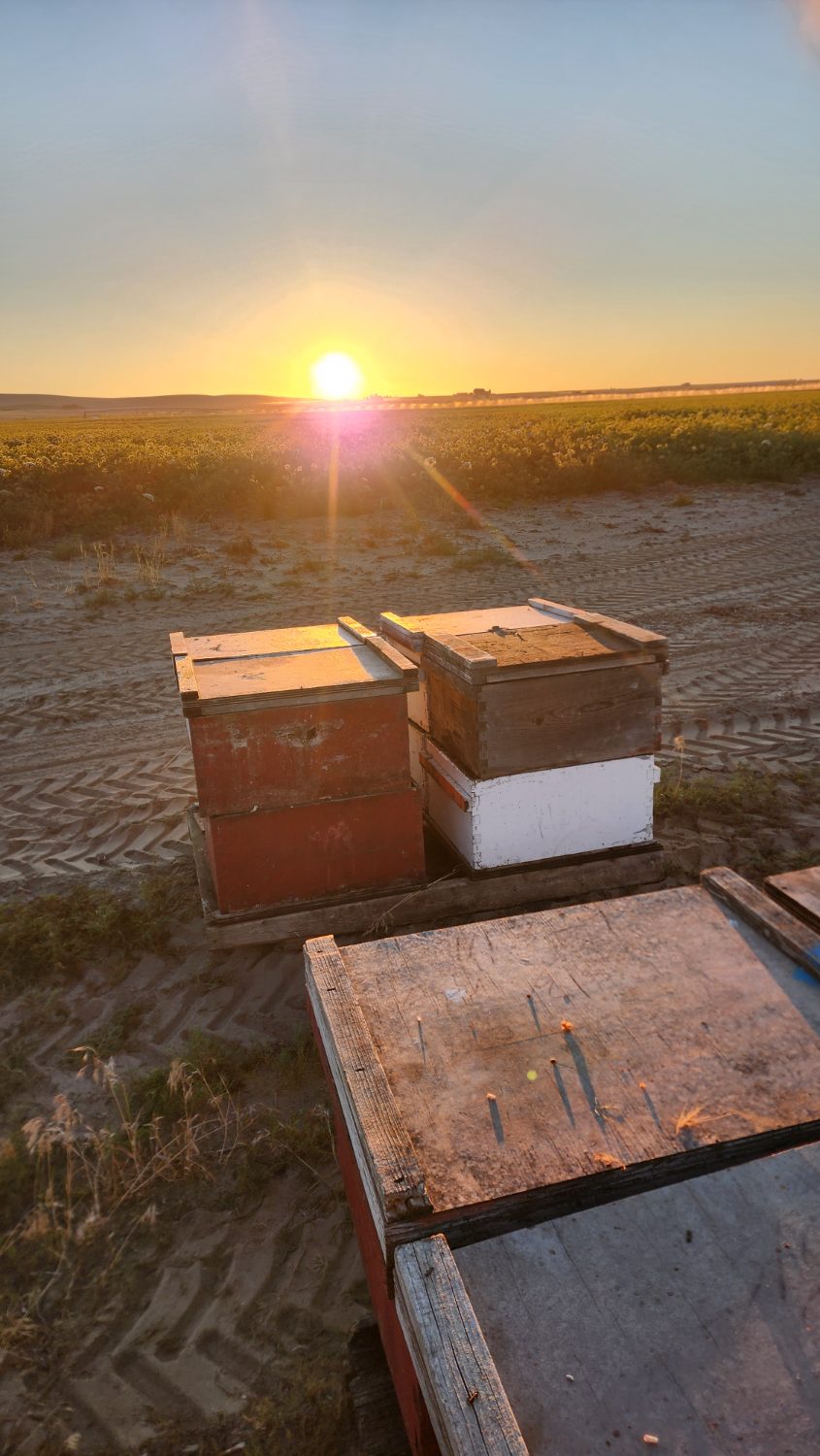



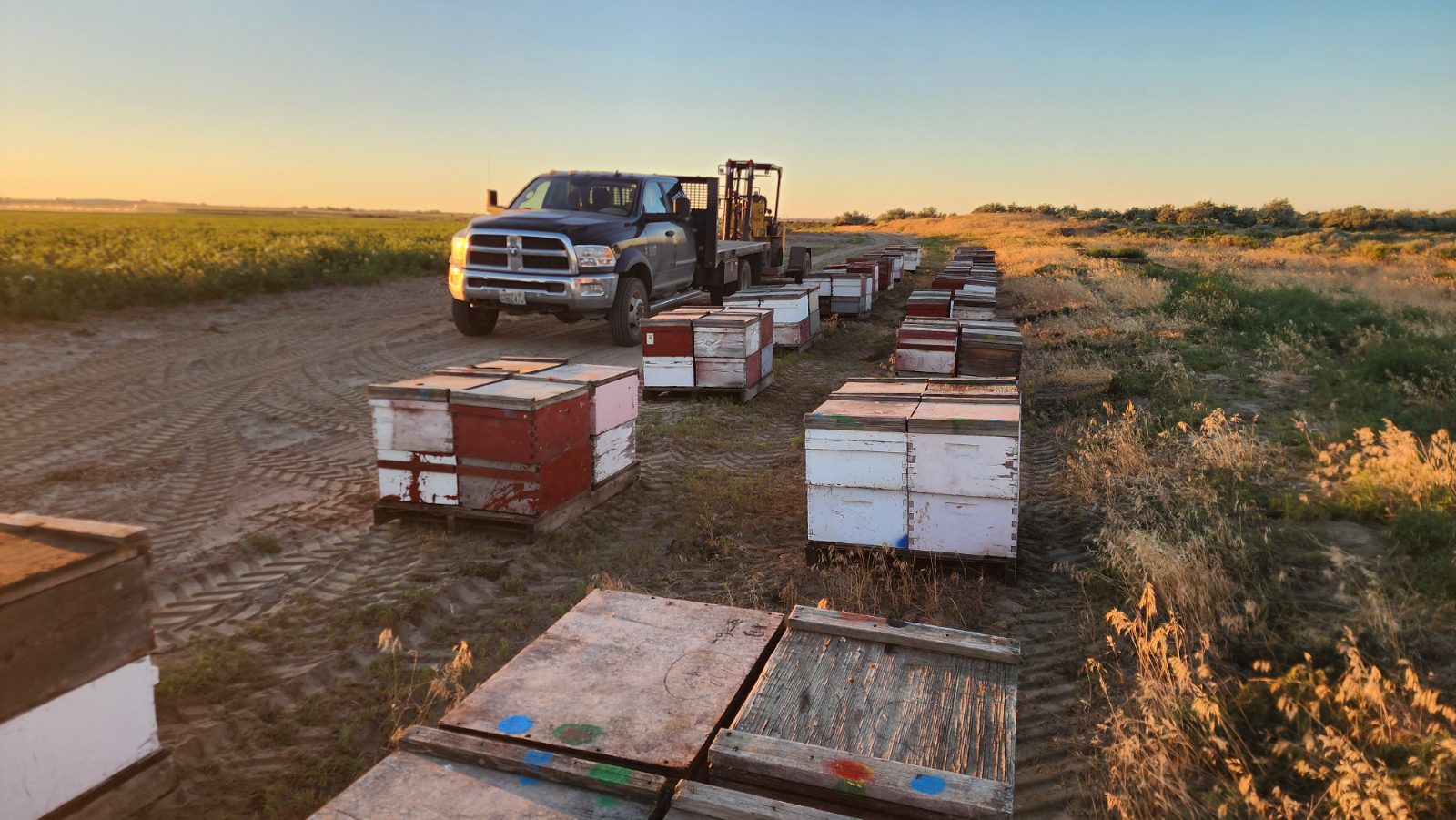
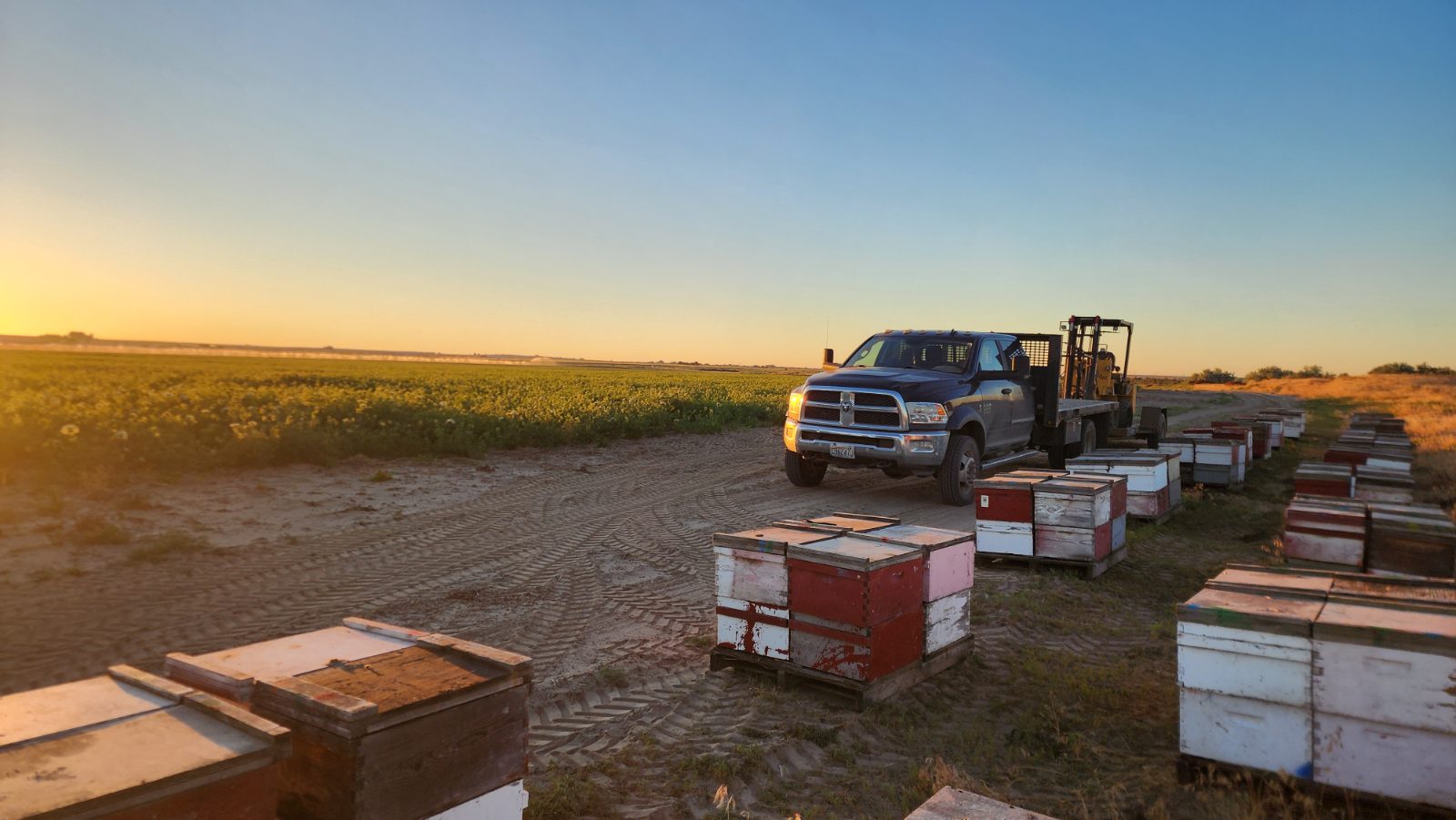
Set to the field, not a chart.
| Planting & row spacing | Recommended |
|---|---|
| Open fieldgood distribution | ~3colonies / acre |
| Hybrid CMS blockspollen-free female lines | up to 8colonies / acre |
Hybrid carrot seed crosses a male-sterile (pollen-free) line with a male-fertile line, usually at ratios of two to four female rows per male row. Bees prefer the rows that offer pollen, so even distribution and high colony numbers are what keep pollen crossing to the seed-bearing line. Research shows honey bees can be reluctant on hybrid carrot — which is exactly why placement and strength are everything here.
Strong colonies, in the right place, on time.
- Keeping bees crossing the linesThe job is moving pollen from the male-fertile rows to the pollen-free seed line — distribution is the whole game.
- High numbers, close coverageHybrid carrot can be a reluctant crop for bees, so we stock heavily and spread colonies through the field.
- Strong, pollen-hungry coloniesColonies with high pollen demand are far more likely to work a low-reward bloom.
- Health tracked through the jobStrength and mite pressure are monitored before and during.
If you want to go deeper.
Independent university-extension and research sources on carrot seed pollination — useful background as we plan your season together.
These figures are general industry recommendations, not a fixed price or a promise of a specific colony count. Final stocking is set per field with you, based on acreage, planting density, variety and bloom conditions. External links open third-party sites we don't control.
Planning carrot seed for the coming season?
Tell us your acreage and bloom window and we'll talk through colony numbers, timing and placement.